
A Vivid Press Edition
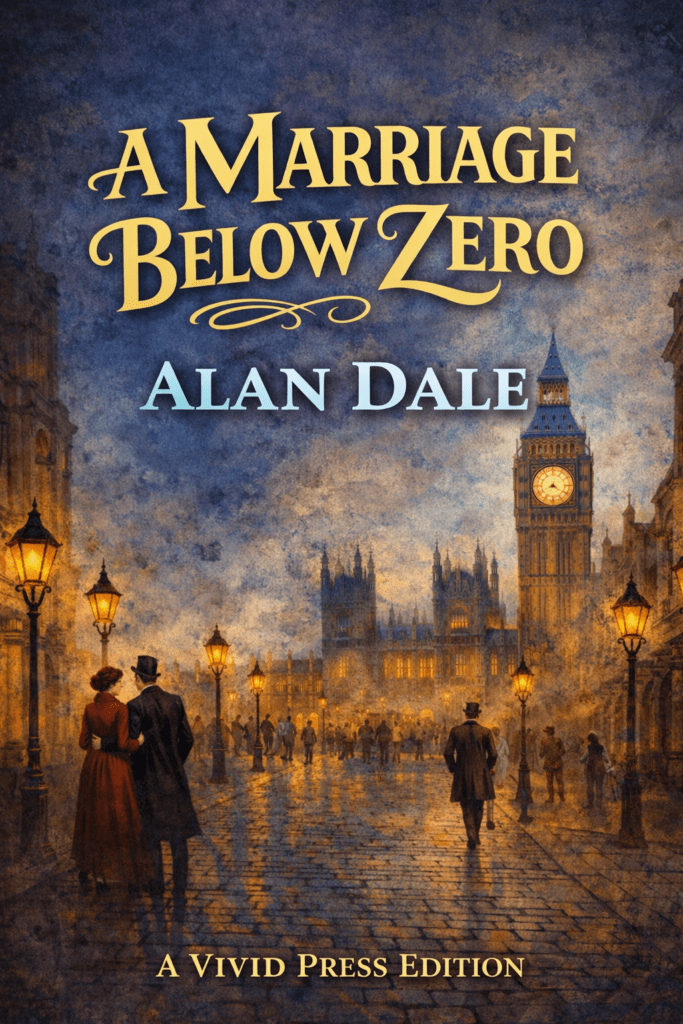
A Marriage Below Zero (1889), written by Alan Dale, is a pioneering work of early gay fiction and one of the first English-language novels to center a homosexual male character in a serious, tragic narrative. The story is told from the perspective of Elsie Bouverie, a young woman who enters into what appears to be a promising marriage with the charming and refined Arthur Ravener. At first, their life together seems socially enviable—secure, respectable, and filled with the expectations of Victorian domestic happiness.
But beneath the surface, something is wrong.
Arthur grows emotionally distant, evasive, and restless. Elsie senses that she is not the true object of her husband’s affection. Gradually, she discovers the devastating truth: Arthur is romantically and physically involved with another man. In an era when homosexuality was not only taboo but criminalized, this revelation shatters her understanding of marriage, loyalty, and identity.
Rather than portraying Arthur as a villain, the novel presents him as a man trapped between societal expectations and his authentic self. The “marriage below zero” becomes a metaphor for a union devoid of warmth, passion, and truth—frozen by repression and secrecy. As scandal looms and emotional tensions escalate, the story moves toward a tragic conclusion that reflects the harsh realities faced by gay men in late 19th-century society.
The Mystery of the Yellow Room
Gaston Leroux
A Vivid Press Edition
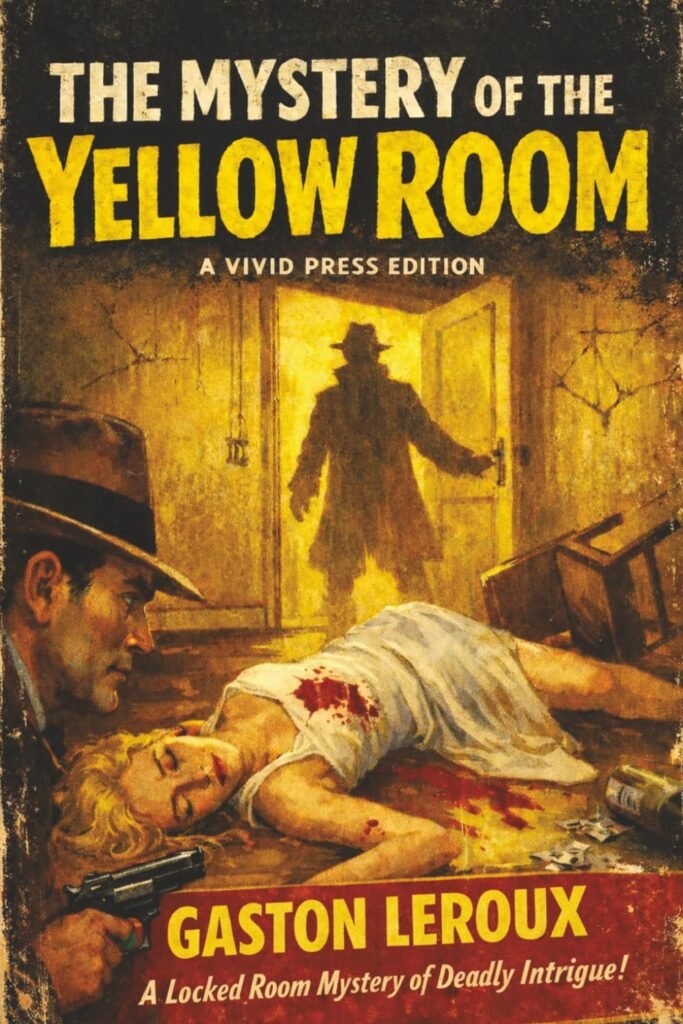
Now in a Vivid Press Edition. A woman is attacked in a locked room. The door is bolted from the inside. The windows are too small to pass through. There are no hidden exits. When the door is broken down, her attacker has vanished without a trace.
It is one of the most perfect crimes ever committed — and one of the most perfectly constructed mysteries ever written.
First published in 1907, Gaston Leroux’s The Mystery of the Yellow Room stands as the gold standard of the locked-room mystery, a novel so precisely engineered that even the greatest detective writers of the twentieth century — from Agatha Christie to John Dickson Carr — acknowledged they were trying to match it. Into the impossible puzzle steps Joseph Rouletabille, an eighteen-year-old reporter with a genius for logic and a gift for seeing what others overlook. What he uncovers will upend everything you think you know about the crime, the suspects, and the truth.
Set against the vivid backdrop of Belle Époque France, this is a novel of misdirection, revelation, and razor-sharp reasoning — a masterwork that invented conventions the genre still follows today.
This Vivid Press Annotated Edition presents the complete text with an original introduction placing the novel in its literary and historical context, exploring the life of Gaston Leroux and the enduring legacy of the mystery he created. Prepared for the modern reader, it is the ideal way to encounter — or rediscover — a genuine classic of crime fiction.
The Willows by Algernon Blackwood
Vivid Press Edition
When Algernon Blackwood published The Willows in 1907, the modern world was congratulating itself. Industry was expanding, science was mapping the unknown, and reason seemed to be winning. And then along came a quiet river story that suggested something far more unsettling: the universe is vast, indifferent, and not especially impressed with us.
On its surface, The Willows is simple. Two friends canoe down the Danube, camp on a shifting island thick with willow trees, and begin to sense that they are not alone. But what follows is not a conventional ghost story. There is no tidy monster, no clear explanation. Instead, Blackwood creates a growing pressure — a feeling that the natural world itself is thinning, opening, revealing something just beyond human understanding.
This story helped shape what later became known as “weird fiction.” Writers who came after Blackwood recognized the power of what he accomplished here: dread built not from spectacle, but from atmosphere; fear born from the realization that reality may not be stable.
More than a century later, The Willows feels remarkably modern. Its quiet eco-unease, its sense of human smallness against landscape, and its refusal to offer easy answers resonate even more strongly today.
Vivid Press is pleased to present this enduring classic to a new generation of readers — not simply because it is old, but because it remains alive. Some stories fade. This one lingers.
Carmilla by J. Sheridan Le Fanu
A Vivid Press Edition